The Moment That Changed Everything
In college, I was volunteering my way through different medical fields, trying to find where I belonged — veterinary medicine, general practice, physical therapy. I was working as a physical therapy assistant at Vassar Hospital in upstate New York when a doctor leaned into the department and asked if someone could help him. He was casting a special brace for a polio patient, and he needed an extra pair of hands to hold her leg steady.
A week later, he came back and asked if I wanted to see the result. Of course I did.
He brought me down a hallway where the patient was standing in her new brace. "Start walking," he told her, "but be careful — not too fast." She took a few steps, then a few more, faster and faster, and started to cry. "Oh doctor, I can walk. It's a miracle."
I was floored. I asked him what kind of doctor did that. "A podiatrist," he said. "We're specialists — just the ankle and foot. Braces, orthotics, injections, physical therapy — all of it."

I had never heard the word before. I went looking for the best podiatry school in the country and found it in Philadelphia. I was top of my class, top of my state in the MCATs, and I got in. That was 1985. I started treating patients in my second year of school — which means I've been doing this for nearly 40 years.
Why My Orthotics Are Different
I'm a surgically trained podiatrist, but today my practice centers on a non-surgical approach — orthotics, posture and balance correction, and nutrition. I'm the only podiatrist in the country who still makes every orthotic herself, by hand, with no manufacturing company in between.
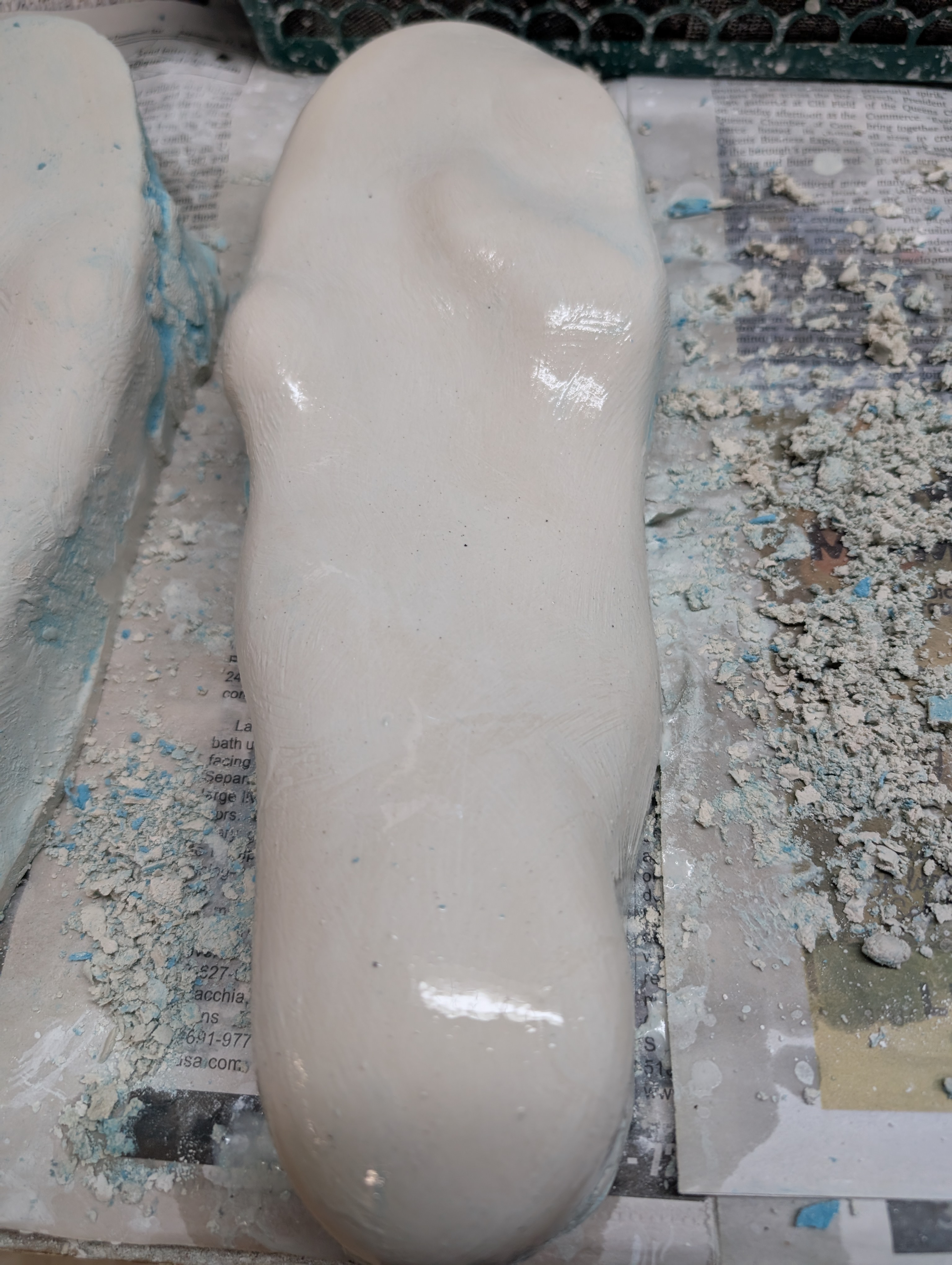
I do it the old-school way — taking an impression of the foot weight-bearing, not with the foot lifted in the air. I fill that impression with plaster, and once it hardens, I shape this replica of the foot into what it should be — not what it currently is. Creating that corrected, weight-bearing plaster model is a lost art in orthotics; it alone takes four to five hours, before any orthotic work even begins. Only once that model exists do I start making the orthotic itself.
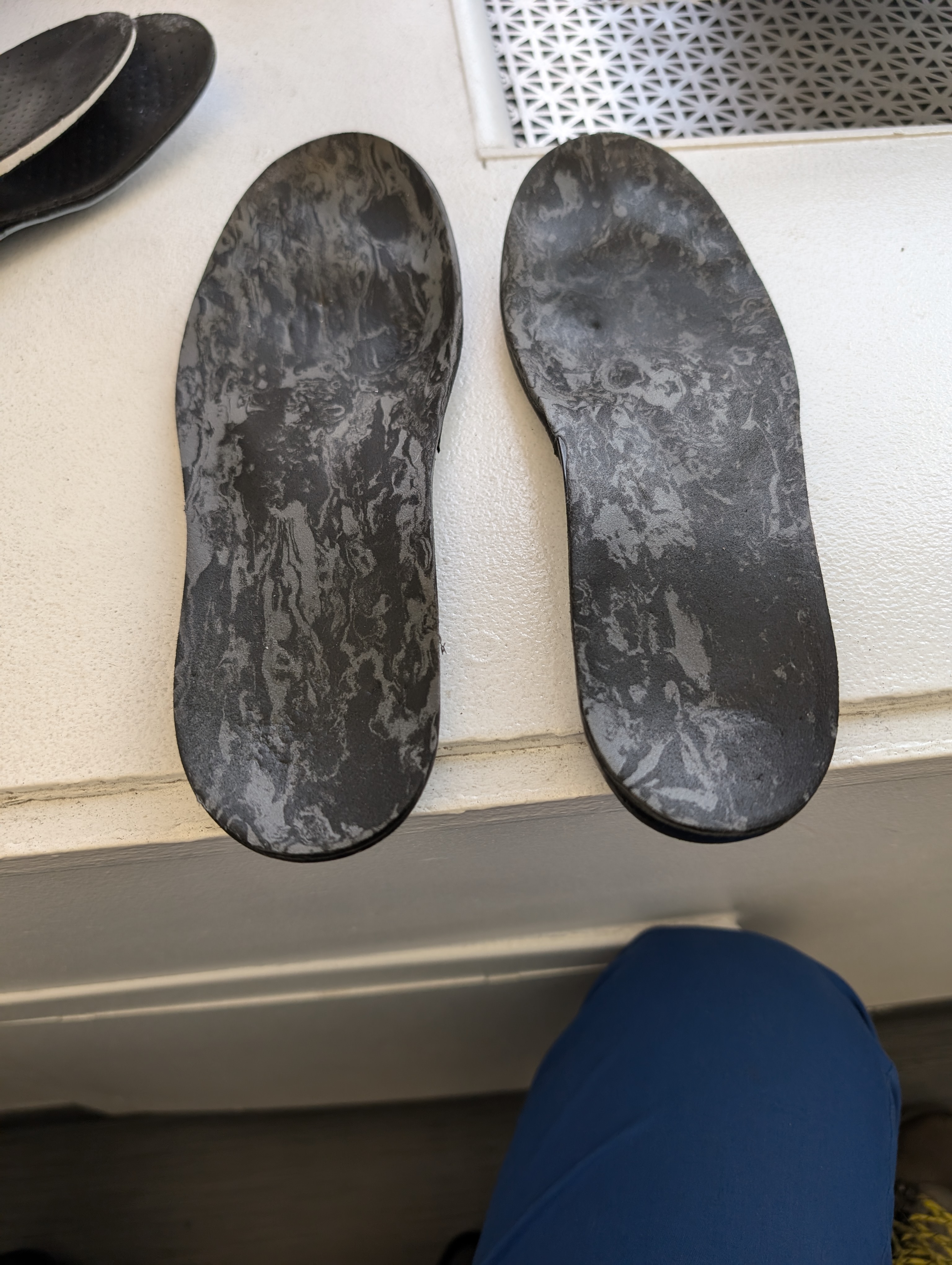
Most orthotics you'll find are hard plastic, mass-produced, and completely unmoldable — one shape, forever. Mine aren't. I can adjust them as your foot changes, or temporarily reshape one to take pressure off an injury while it heals. I consider them about 95% effective, because they're built to move with you, not against you.
Making one properly takes real thought. You're not just looking at a foot in three dimensions — you're calculating how it moves through space, how the whole body shifts with it. I call it four-dimensional work, because no scan or video can capture it. Honestly, that's part of why I garden — it's where I do my best thinking, and where I unwind after a day of the kind of close, careful attention orthotic-making demands. The extra vegetables go to my neighbors, which I love just as much.
Weight-bearing plaster cast


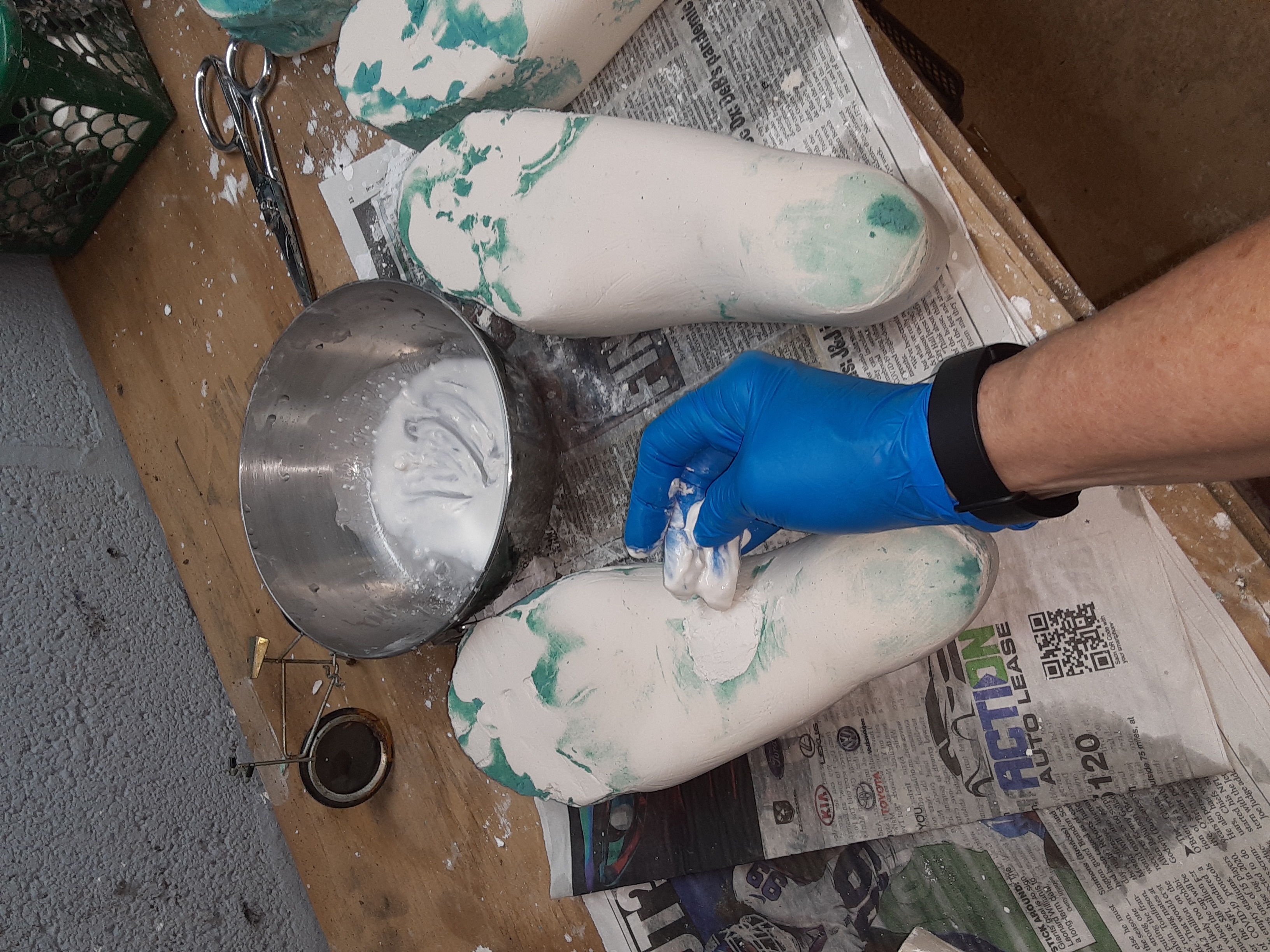
Weight-bearing plaster cast
Plaster corrected cast
Finished custom orthotics


My garden through every season — where I do my best thinking, and the neighbors who get the extra harvest
Weight-bearing plaster cast
Weight-bearing plaster cast
Why Patients Travel to Find Me
I take the time other practices don't — explaining everything thoroughly, being upfront about cost, setting out a clear plan before we start. That's brought me a practice unlike most: patients from 8 months old to 103, sometimes three generations of one family in the same visit. People come from Germany, Panama, New Zealand, Israel — some through a Google search, some through my YouTube channel, many through referrals from other doctors and patients.
A lot of what I see are patients who've already been everywhere — seen doctor after doctor, spent enormous amounts of money, and still found no relief. I made a video for them called "The End of the Road," because that's often exactly what it feels like by the time they find me. Many also come to me for medical guidance well beyond feet, because they know I stay on the cutting edge — especially when another doctor has already recommended surgery and they want a second opinion first.
If you've been told surgery is your only option, or you've simply run out of answers, I'd like the chance to take a real look.
